
SUMMARY
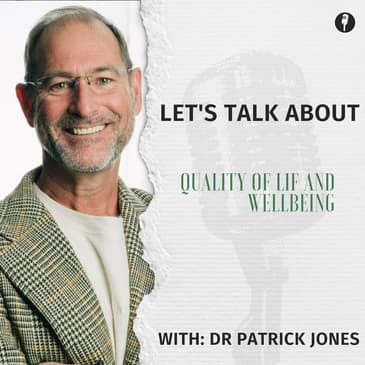
Episode 1: Learning to Relax and De-stress
Patrick Jones, an expert on mindfulness, discusses the concept and its benefits. Mindfulness is described as non-judgmental awareness of passing thoughts and emotions, allowing individuals to detach from their inner world and reduce stress. The lack of mindfulness can lead to anxiety and depression. Techniques for achieving mindfulness include clear mind open heart and present moment awareness exercises. Recommended resources for learning more about mindfulness include mobile apps, Netflix series like Headspace, counting breaths, and ongoing discussions on the show.
TRANSCRIPT
Interviewer:
With me on the line is Patrick Jones. How are you?
Patrick:
I'm good. Good to get going
Interviewer:
Now there's a host of things we can talk about. We've convened beforehand to see if to figure out what areas we can address. But the thing that I thought we'd look at today if you're happy to do so, is mindfulness.
Patrick:
Yeah, no, that's great. It's sort of been the subject of my doctoral work for many years and so it's kind of very eleven from a clinical point of view in terms of mental health, but also just in terms of just general happiness. And I'm pleased that it's got now into the main sort of mainstream. So yeah, it's very happy to have a chat. You make the difference.
Interviewer:
Yes, of course. And you're absolutely right. It does feel like the word mindfulness is propagated in several different spheres, but for those who don't understand what it means or don't know what it means and I think I'm probably in that camp as well, where I've heard it many times, I don't have a proper full definition of it. Let us know. What are we referring to when we talk about mindfulness?
Patrick:
Yes, well, essentially if we keep it simple, it's pretty much 1.3s what they call a neutral, nonjudgmental awareness of your thoughts as what they call passing mental events versus realities. So often what happens is we have the world in front of us and we relate to that. We could say that's reality, but then sometimes when we get lost in our head, we relate to what I would call virtuality or the virtual world, as if it's the real world.
And so we might have a thought and then because of that thought we'll have emotion and a little bit like watching TV, something shocks us and our body moves and then we realize, okay, obviously a great movie, but it's kind of not real yet. I'm still relating to it as if it's real.
So Mindfulness is trying to extract us from relating to our inner world all those thoughts, feelings, and sensations, as if they're facts, as if they're realities, but in actual fact, we've sort of created all of them in our head, so we probably would call them more virtuality. Mindfulness just gives us a chance to be able to step back and go, that's just a thought. I don't have to relate to it as a reality if that makes sense.
Interviewer:
It does. And I feel like this is something that a lot of people can relate to when it comes to having felt or having gone through moments of depression or anxiety like I know a lot of people do, even if they're not of clinical severity. A lot of people I know will have experienced anxiety or depression in varying forms. And it does sort of feel like you're stuck in your head in a way when you come to fixate on those things, and that can be very stressful. So how can a lack of mindfulness contribute to that feeling of stress? But then, beyond the obvious reasons, why are those detrimental?
Patrick:
Yeah. Yeah, for sure. When you think about it often when you're like say elite athletes, they might be in the zone and they've got like a split second to be able to take a shot or whatever the sport might be in that time. What makes them also good is their ability to be single-pointed in terms of their concentration and not be distracted. Mindfulness is about the ability to not sort of be distracted by those thoughts that take us away.
And especially if they're upsetting ones, they can create a whole lot of stress. And then the way that stress gets experienced is usually the sequence it starts as a thought, it happens to be a negative one and we believe it then typically the fruit from that tree is distress, which is a negative feeling. So the thought happens first, then we have the negative feeling and as soon as we have those two, the third part of the chain is then a behavior takes place. We try and do something, either avoid it or try and neutralize it or whatever else.
So the lack of mindfulness in a sense is when we're sort of stuck in that whole world and not able to pull ourselves out. And as soon as we're in that sort of trap, stress is an automatic fruit. So the whole goal is to try and get ourselves out of that so that we actually can just be in that more kind of peaceful middle if you like.
Interviewer:
Yeah. And 2.4s what ways do people find most effective for doing that? Like how do our lifestyles impact our sense of mindfulness? And what modifications can be made to in turn reduce stress?
Patrick:
Yeah, okay. Typically I realize this having done a lot of sort of work and productivity stuff, that we often are in a goal mode, we have to do this, we have to get that done. And we typically often can be ahead of the moment. This is goal-setting theory. They've found that about 95% to 98% of life is what they call sort of in transition between goal A and goal B. Like I've got to get this done, then I've got to get that done. And like one or 2% is spent in actually thank goodness I've done it. Now I can kind of just hang and now I can just relax. And we allow ourselves a little bit of that and then it's like oh, now I've got to go and do this or I've now got to achieve that.
And so in a sense, what we're trying to do with the whole mindfulness kick is just to get ourselves in the moment, not to always be mostly in the future. Clinically speaking, people who have more sort of anxious profiles tend to be more future mode, whilst people who are a bit more upset or depressed might be more past mode.
Mindfulness is really about just trying to get us into present mode and just being able to just be in that more natural resting state of the moment which is by comparison to those other two, quite fine. That's what it tries to do.
Interviewer:
But it's interesting as well when you mention that fixating wholly on the future can also be a source of anxiety. I remember that I think like my uncle mentioned, that the best advice that he ever got given was are when you put off doing a job you do it ten times in your head and in that way become anxious. So it feels like that also has a link to do with and I can see it when it comes to doing stuff, even around the show, when it's like, okay, I've got to do this, I'll do it in a minute. But then it eventually just plagues you and it's an anxious kind of plague but in your mind, you're running through what you're going to do and it's so much better to just do it in the moment. That you have that in the nation.
Totally. And that's one of the time management principles. They say only deal with a piece of paper once, and also all that decluttering stuff there's, then the sort of declutter your environments because your mind gets so caught up in stuff and 1.9s you don't clean a spot. And so you end up just every time you say, oh, jeez, I got to get rid of that. Getting rid of that instead of just kind of decluttering is all about not having to keep returning to that stuff because it takes energy.
Interviewer:
So what techniques help in reducing stress and achieving mindfulness?
Patrick:
Okay, so there are a whole range of really useful methods and I teach people like a swathe of ten of them. But one sort of summary you could say is what I call a clear mind open heart. The clear mind is essentially being able to watch your thoughts neutrally and non-judgmentally whilst they pass, seeing them as created versus real as one technique.
And then that can be combined with a clear mind. That's the clear mind bit and then the open heart bit is to allow emotions and sensations to move through 1.8s versus either suppressing them consciously like I can't feel that, or getting so stuck in them that they become bigger. So the clear mind open heart is to watch and allow, you could say, as one method and I thought one particular specific method that we could at least look at today very simply and quickly is present moment awareness and that is the ability to just sort of be in the moment.
And one good little method that you can use I call it the VAK, is the visual auditory kinesthetics. And the visual is just simply bringing your attention to the place you're in front of and just noticing everything on a visual level that you can see without comment, without narrative, without analysis. And then you do that one for a minute, and then you move to so it's VAK auditory kind of setting. You move them to the auditory one.
Now listen to all the possible noise. Noises that might just be happening. Sometimes they're subtle. But again, the point of all these is it just helps ground you in the now and then the third one, the kinesthetic, or like body, is bringing your attention to the sensations of the body from head to toe. You can do that. Really simple exercise, VAK, visual, auditory, kinesthetic. 1 minute on each and three minutes you kind of just turned up back in the moment. And that's one really good technique to help.
Interviewer:
Now, what resources do you suggest our listeners check out if they want to learn more?
Patrick:
Yeah, for sure. So Mindfulness apps are all over the place. Lots of them are for free. That's one thing I'd immediately suggest that people can do. Also Netflix, funnily enough, or certainly providers like that. There's one currently running at the moment called Headspace, and that's a nice little quick resource. It's 20-minute episodes, and the first ten are on Mindfulness and the second on simple relaxation and meditation. The third is in terms of resources, which would be just the ones that you can carry yourself, which would be like counting, say, your breaths from one to ten. Just slowly.
Each breath is one to ten and then rinse and repeat. That's just a very simple mobile resource you can take. And then I thought maybe if you want to each know, we chat, you can do a spot each week we can focus on a different method. So this in itself, the show can also be a resource in terms of being able to get Mindfulness.
Interviewer:
Thanks for joining us on the drive show, Patrick. I hope we'll be able to talk to you with you again next Tuesday.
Patrick:
Yep, that sounds great. All right, take care.
Interviewer:
Excellent. You, too.